Lagos Address
Plot 954a, Idejo Street, Off Adeola Odeku Street, Victoria Island, Lagos
Work Hours
Monday to Friday: 9AM - 4PM
Lagos Address
Plot 954a, Idejo Street, Off Adeola Odeku Street, Victoria Island, Lagos
Work Hours
Monday to Friday: 9AM - 4PM
![mainstreetCapitalLogo[White] - 02](https://mainstreetcapltd.com/storage/2025/11/mainstreetCapitalLogoWhite-02.svg)
While you no longer have to physically be at your bank to make payments or shop at your favourite online stores, what risks do you reckon this digital comfort holds for your online security?
With the increasing ease technology brings to our daily lives also comes a myriad of imminent digital threats for every time we perform an action online. Over time, these digital traps have devised sophisticated malwares to lure unsuspecting users such that they go undetected. At just the click of a link, an attacker could have full access to your personal information, just enough to wreak untold havoc. Examples of the various forms digital/cyber crime could take include and is not limited to the following:
The above-mentioned are just a few of the rampant digital scams out there.
While many are aware of this, there’s an untold ignorant population of people who leave reckless digital footprints on every website they visit. Let’s take a look at the most staggering cybercrime stats and trend in the past year.
Cybercrime Statistics
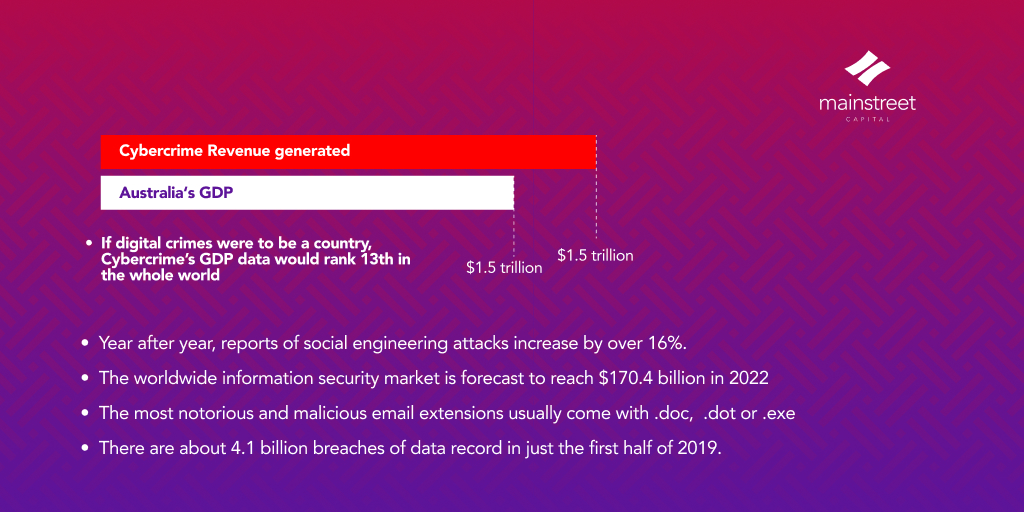
Long gone are the days where we used to have physical bank/ financial heists, now cyber/ digital crimes account for the largest-growing crime in the whole world. For a clearer context, the profits generated by digital crimes worldwide outweighs and can stand toe to toe with the national GDP of most developed countries. The digital crime industry generated more than $1.5 trillion in the year 2018 entering into 2019 and if we were to rank by country GDP, profits from digital crime outweigh Australia’s country GDP which stands at $1.4 trillion. For further clearer context, if digital crimes were to be a country, at $1.5 trillion in profits, its GDP data would rank 13th in the whole world! Absolutely terrifying if you think outside of the number being just mere statistics and that these are real lives being ruined.
Another corner of the digital world so loved by many, especially millennials– Social Media, contributes hugely to an industry notorious for the sale of personal data. This industry churns out over $600 million every year for poaching personal data like usernames, emails and even passwords.
Ranking top as one of the most notorious forms of digital attacks is social engineering attacks. This involves using psychological blackmail and manipulation into tricking users to give out sensitive information like credit card details and/or passwords. Year after year, reports of social engineering attacks increase by over 16%.
Yet another very common scam that poses great security risks to both businesses and individuals alike is the email phishing scam. Here, scam artists send out emails designed to look like they are from reputable organizations and attach phishing links which an unsuspecting user clicks and they are left compromised.
How to protect yourself from cyber fraud
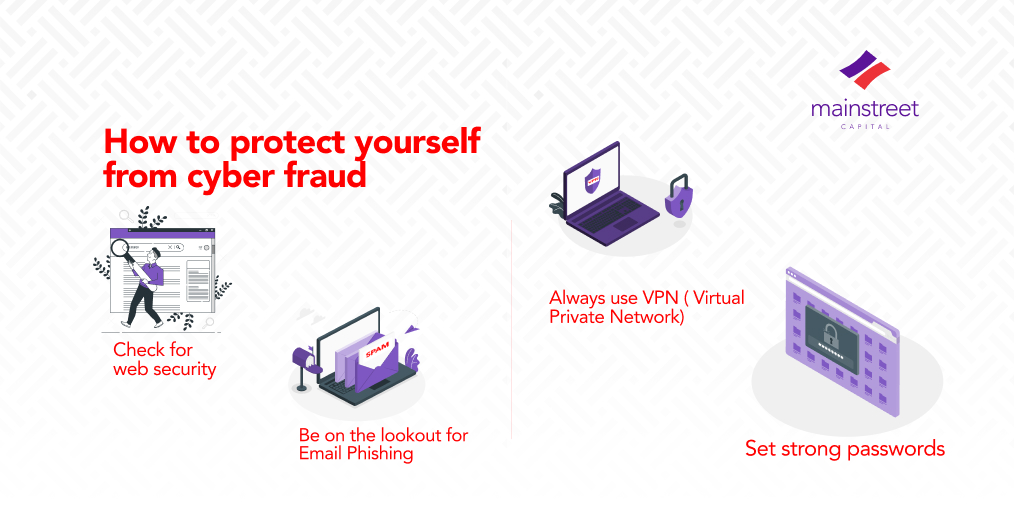
As relentlessly as cyber-scammers devise new sophisticated ways to trap unsuspecting users is just how much internet users need to always stay on-guard to ensure their daily online experience is safe and secure. So how can you ensure to keep a safe digital footprint?


With the ease technology brings also comes sophisticated cyber attacks, this means you have to constantly be one step ahead to ensure a safe online experience.
To Stay tuned for more updates; follow Mainstreet Capital Limited on social media ( LinkedIn | X | Instagram | Facebook ). Remember, the more you learn, the better equipped you’ll be to make sound investment decisions. For more information or personalized investment strategies that take advantage of the new economic realities, book a session with our expert asset managers.
